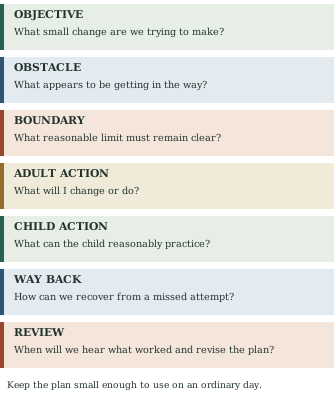
The following cases are fictional illustrations, not reports of measured outcomes. Each shows a possible sequence of decisions, including an imperfect first attempt. Use the questions that fit your household and revise the arrangements for the actual children, resources, and responsibilities involved.
The situation. Every school morning, nine-year-old Robin is still looking for something when the family needs to leave. Her father, Luis, responds by beginning reminders earlier. Eventually he is narrating the entire morning. Robin complains that he never stops talking, and Luis says she would not need reminders if she were responsible. They both leave feeling that the other person caused the problem.
The first question. Luis chooses a smaller objective than becoming responsible: leave with the required belongings at the necessary time. He asks Robin to walk him through the previous morning. They discover that three things were missing from their plan. A school notice had changed what she needed to bring, her shoes were drying in a different place, and Luis had asked her to help with another task just before departure. Robin also admits that she began drawing after breakfast and lost track of time.
The account does not supply a single culprit. It identifies information, storage, adult scheduling, and Robin's choice of activity. Luis can address these separately. He does not need to decide whether the morning was entirely her fault before improving it.
The arrangement. They choose a place for the bag and a brief evening check for changed requirements. Robin gathers her belongings; Luis remains responsible for notices that come through adult channels and for communicating changes. They agree on what ready to leave means. Luis will give one reminder at an agreed point, with additional help if a genuine problem appears. Robin will choose a morning activity that can stop when that reminder comes.
The plan includes a fallback. If a necessary item is missing, Robin tells Luis directly rather than continuing a private search until departure. They decide what can reasonably be handled then and what consequence follows from leaving without a nonessential item. They do not use withholding necessary care or school access as a lesson.
The first attempt. The bag is ready, but Robin continues drawing after the reminder. Luis is tempted to deliver his old speech. Instead, he names the immediate action: put the drawing in its folder and come to the door. Later they review the activity choice. Robin says she thought she could finish one more part. That is relevant information, but the agreed departure still matters.
The revision. They move drawing to a different part of the day for the moment and choose an easier stopping activity in the morning. Luis also notices that he gave several extra reminders before the agreed one. He acknowledges that he did not really test the new arrangement. On the next attempt, he keeps his part more accurately.
What to assess. The useful measures are whether required belongings are prepared, whether changes reach the right person, and whether departure requires less avoidable conflict. Robin does not have to become cheerful about leaving. Luis does not need a perfectly silent morning. If the difficulty continues, they examine the remaining obstacle rather than merely increasing the reminders again.
The transfer. Once Robin manages the arrangement more reliably, she can own more of the evening check. Luis does not quietly keep doing it and then complain that she depends on him. Nor does he remove all support without notice. The next step is a clear handoff, with an understandable way to ask for help. Chapters 1, 4, 7, and 9 provide the main questions used in this case.